
What Is FSC Certified Paper?
If you are comparing toilet paper, tissues or hand towels and keep seeing the FSC label, the obvious question is: what is FSC certified paper, and does it actually make a difference? For households, offices and commercial sites that buy paper products regularly, it can be a practical way to choose stock that supports responsible sourcing without making everyday purchasing harder or more expensive than it needs to be.
FSC stands for Forest Stewardship Council. FSC certified paper is paper made from materials that come from responsibly managed forests, recycled sources, or a mix of controlled inputs that meet FSC standards. In plain terms, it means the fibre used to make the paper has been tracked through a verified supply chain, with rules in place around environmental protection, ethical forestry and accountability.
That matters because paper products are everyday essentials. They move quickly in homes, workplaces, hotels, schools and public amenities. When you are ordering in bulk, the choices you make add up. Certification gives buyers a clearer way to assess where a product comes from, rather than relying on vague green claims on the packaging.
What is FSC certified paper and how does it work?
FSC certification is built around two linked ideas: responsible forest management and chain of custody. Forest management certification applies to the forests themselves. It checks whether timber and fibre are harvested in ways that protect biodiversity, waterways and ecosystems, while also respecting workers and local communities.
Chain of custody certification follows that material as it moves through manufacturing, converting, packing and sale. So if a carton of toilet tissue carries an FSC claim, the business selling that product should be able to show that the certified material was handled and documented correctly all the way through the supply chain.
This is what separates FSC from a simple marketing statement. It is not just saying a product is "eco-friendly". It is a certification system with auditing, standards and traceability.
For buyers, that traceability is often the main benefit. You are not expected to inspect a forest or investigate a mill yourself. The certification framework does that work in the background and gives you a recognised benchmark.
The different FSC labels on paper products
Not all FSC labels mean exactly the same thing. This is where some buyers get confused, especially when comparing similar paper products across different price points.
FSC 100% means the fibre comes entirely from FSC-certified forests. FSC Recycled means the product is made from recycled material that meets FSC requirements. FSC Mix means the product contains a combination of certified material, recycled material and controlled sources.
That does not mean one label is always better than another. It depends on the product, intended use and budget. Recycled paper can be a strong option for buyers focused on reducing virgin fibre use. FSC 100% may appeal to buyers who want direct assurance around certified forest inputs. FSC Mix can offer a balanced supply option where availability, performance and cost all matter.
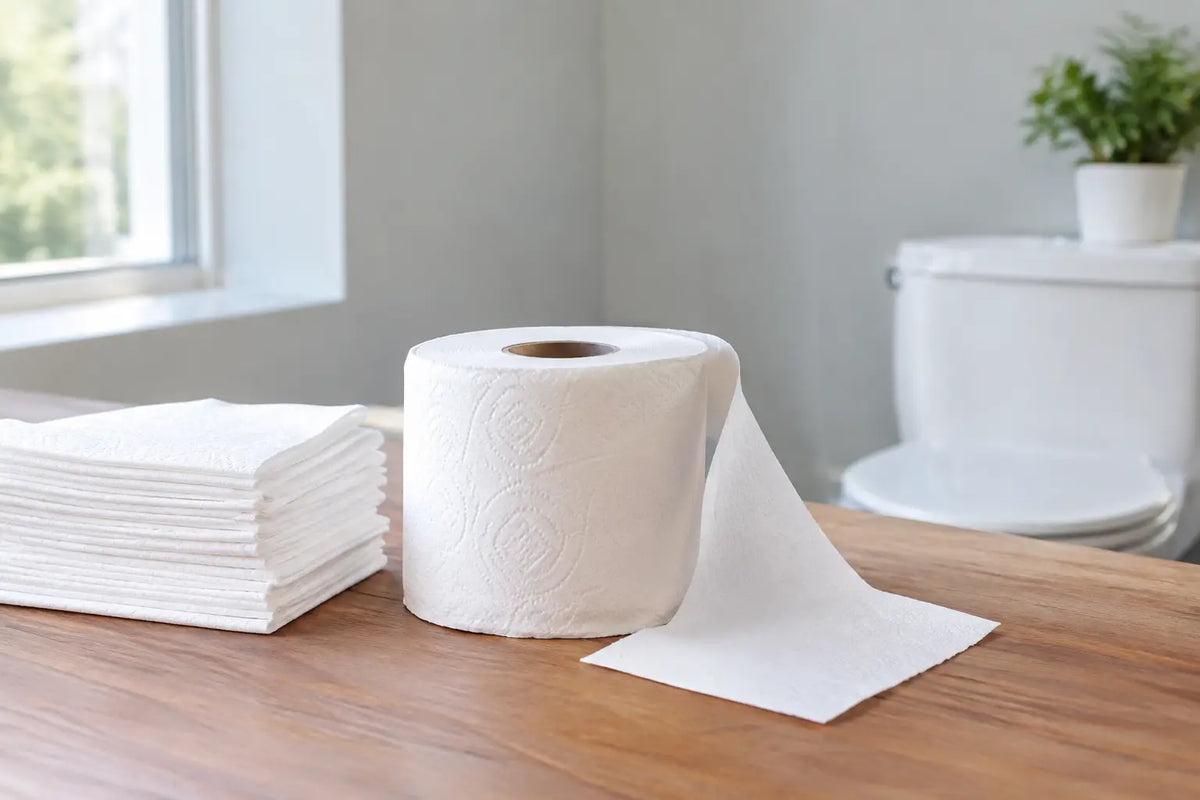
For washroom products, this flexibility is useful. Some buyers want a softer, premium finish for hospitality or executive amenities. Others need dependable bulk stock for high-traffic commercial bathrooms and care most about value, consistency and responsible sourcing. FSC certification can sit across all of those categories.
Why FSC certified paper matters in everyday purchasing
For a procurement team or household buyer, sustainability claims only matter if the product still performs. Nobody wants toilet paper that falls apart, hand towels that do not absorb properly, or tissues that feel rough simply because the packaging sounds worthy.
That is why FSC certified paper is best understood as a sourcing standard, not a promise about softness, ply count or absorbency on its own. Certification tells you something important about where the paper fibre came from and how it was handled. Product quality still depends on the grade, construction and manufacturing.
The good news is that these things are not in conflict. FSC certified paper products can still be soft, strong, well-presented and suited to high-volume use. In many cases, buyers can choose certified paper without compromising on the practical standards they expect from everyday washroom essentials.
There is also a business case. Offices, accommodation providers, cleaners and facilities managers are under more pressure to show responsible purchasing decisions. Choosing certified consumables is one way to support internal sustainability goals with products you are already buying anyway.
What FSC certification does and does not guarantee
This is where a bit of nuance helps. FSC certification is valuable, but it is not a catch-all measure for every environmental question.
It does indicate that fibre sourcing meets recognised standards for responsible forestry or recycled content. It supports better transparency and helps reduce the risk of poorly sourced raw materials entering the supply chain. It can also support broader environmental and social outcomes in forest-dependent regions.
But it does not automatically tell you everything about a product’s carbon footprint, transport emissions, local manufacturing, plastic packaging or how the item was delivered to your door. A product can be FSC certified and still differ significantly from another product in those areas.
That is why many buyers now look at FSC certification as one strong signal within a wider purchasing decision. They may also consider recycled content, bamboo content, packaging format, carton efficiency, delivery frequency and supplier values.
A commercially practical approach is usually the best one. If you can source paper products that are fit for purpose, price-conscious and FSC certified, that is often a smart step in the right direction.
Is FSC certified paper the same as recycled paper?
No, although the two can overlap.
Recycled paper is made using recovered paper fibres instead of relying entirely on new virgin fibre. FSC certified paper may be recycled, but it can also come from virgin fibre sourced from FSC-certified forests. If a product carries the FSC Recycled label, then recycled content is central to that certification claim.
This distinction matters when comparing products. Some buyers assume recycled always means certified, or that certified always means recycled. Neither is automatically true. You need to look at the specific label and product information.
In washroom settings, there is rarely a one-size-fits-all answer. Recycled options can be excellent for many workplaces and public amenities. Premium FSC-certified virgin fibre products may be better suited to hotels, client-facing offices or homes where feel and finish matter more. The right choice depends on traffic, presentation, user expectations and budget.
How to choose FSC certified paper for your home or business
Start with the basics: what is the product for, how quickly will it be used, and what standard of comfort or presentation do you need? A busy office bathroom has different needs from a guest ensuite or boutique accommodation fit-out.
Then look at the product specifications. Ply, roll length, sheet count, absorbency and dispenser compatibility still matter. FSC certification should support your decision, not replace the practical checks that keep your washroom running smoothly.
It is also worth buying from suppliers that are clear about their product claims. If a paper product is FSC certified, that information should be easy to identify. Transparency matters, especially for organisations that need reliable documentation and dependable repeat ordering.
For Australian buyers, convenience is part of the decision as well. Bulk ordering, carton quantities and consistent stock availability can make more difference over a year than chasing the lowest unit price on a single order. Responsible purchasing works best when it is simple to maintain.
That is one reason many buyers prefer to source through a supplier that combines everyday product performance with certified options and a broader sustainability commitment. At Washroom Essentials, that balance matters because customers want practical essentials they can rely on, backed by choices that support better outcomes beyond the bathroom door.
Common misconceptions about FSC certified paper
One common myth is that certified paper is always expensive. Sometimes it costs more, sometimes the difference is minor, and sometimes scale or product format narrows the gap. In bulk categories, the price difference is often less dramatic than people expect.
Another misconception is that FSC certification is only relevant for large corporations. In reality, any buyer can use it as a helpful filter. Households, small businesses, cafés, medical practices and schools all buy paper products regularly, so certification can still be meaningful at any scale.
The third misconception is that the label is just branding. While no certification system is perfect, FSC is widely recognised because it uses defined standards and auditing. That gives buyers more confidence than generic environmental language with no verification behind it.
If you are trying to make better purchasing decisions without overcomplicating the process, FSC certified paper is a practical place to start. It gives you a clearer line of sight into sourcing, supports more responsible supply chains and fits neatly into the products people use every day. When the essentials in your washroom need to do their job reliably, choosing paper with credible certification is one small decision that can carry real weight.