
Sustainable Washroom Products Guide for Smarter Supply
A washroom rarely runs out of supplies at a convenient time. For a household, it may mean a last-minute supermarket run. For an office, café, accommodation venue or managed property, it can mean unhappy visitors, extra work for staff and an avoidable rush order. A sustainable washroom products guide should therefore begin with the practical question: what will keep your facilities reliably stocked while reducing unnecessary environmental impact?
The best answer is not simply to choose the product with the greenest-looking packaging. Sustainable purchasing works when product material, quality, dispensing, ordering habits and end-of-use considerations all work together. For Australian buyers, that means selecting dependable paper goods that suit real usage, then buying them in a way that makes commercial and environmental sense.
Start with the paper product, not the marketing claim
Toilet paper, hand towels and facial tissues are everyday essentials, but their environmental impact can differ significantly depending on the fibre source, manufacturing approach and how much product is used. Look for clear material information rather than broad claims such as “eco-friendly”. A supplier should be able to identify whether a product is recycled, bamboo-based, FSC-certified or made from virgin fibre sourced through responsible forestry practices.
FSC certification is a useful signal when choosing virgin-fibre paper products. It indicates that the fibre comes from responsibly managed forests and controlled sources. Recycled paper can reduce demand for new wood fibre and put recovered material to productive use. Bamboo is also popular because it is fast-growing and can be an effective alternative fibre source.
There is no single winner for every washroom. Recycled toilet paper may be the right choice for a workplace focused on circular purchasing. Bamboo toilet paper can appeal to homes and businesses seeking a soft, premium-feeling alternative. FSC-certified products can be a sensible choice where consistent quality, presentation and dependable availability are priorities. The right decision depends on the product’s verified credentials, its performance and the needs of the people using it.
Quality reduces waste more than people expect
A lower-priced roll or hand towel may appear economical until users need twice as much to do the same job. Thin toilet paper, tissues that tear too easily and hand towels with poor absorbency all create more consumption, more bin volume and more frequent restocking.
This is where quality and sustainability meet. A strong, absorbent towel can reduce the number of sheets used per hand dry. A well-made toilet roll with practical sheet size and good softness is less likely to be overused or viewed as a downgrade by staff, guests or customers. In hospitality settings, the feel of washroom supplies also contributes to the overall impression of the venue.
When comparing carton prices, avoid judging only by the number on the invoice. Consider the cost per roll, sheet or use, along with roll length, ply, absorbency and replacement frequency. A hotel-quality product that lasts longer can offer better value than a cheaper alternative that disappears quickly.
Match products and dispensers to the setting
A sustainable choice must fit the washroom where it will be used. Products that are excellent in a family bathroom can be impractical in a high-traffic office or public facility. This is especially true for hand towels and toilet rolls, where dispensing controls how much each person takes.
For homes and small teams, standard toilet rolls and boxed facial tissues are often simple and effective. Buying cartons or bulk packs helps reduce repeat trips and can minimise the packaging associated with frequent small purchases. Just make sure there is clean, dry storage space so the supply remains in good condition.
For busier workplaces, hospitality venues and commercial sites, dispensers deserve more attention. A compatible dispenser protects paper from moisture and contamination while encouraging controlled use. Interleaved or folded hand towels offer a practical one-at-a-time option. Centre-feed systems can suit cleaning areas and high-use environments, while jumbo toilet roll dispensers can reduce changeovers in larger amenities.
The trade-off is that a dispenser system may require an upfront purchase and commits you to compatible refills. However, it can reduce paper wastage, cleaning time and emergency restocking over the long term. Before standardising a site, check refill availability and confirm that staff can change rolls or towel packs quickly.
Use this sustainable washroom products guide to assess claims
Sustainability claims should be easy to understand and supported by specific information. Buyers do not need to become paper-industry experts, but a few questions can separate a meaningful choice from vague branding.
Ask what the product is made from and whether the fibre source is certified. Check whether recycled content is stated clearly rather than implied. Look at packaging material and whether cartons are sized efficiently for bulk delivery. Consider whether the supplier has tangible environmental or community commitments, rather than relying on general promises.
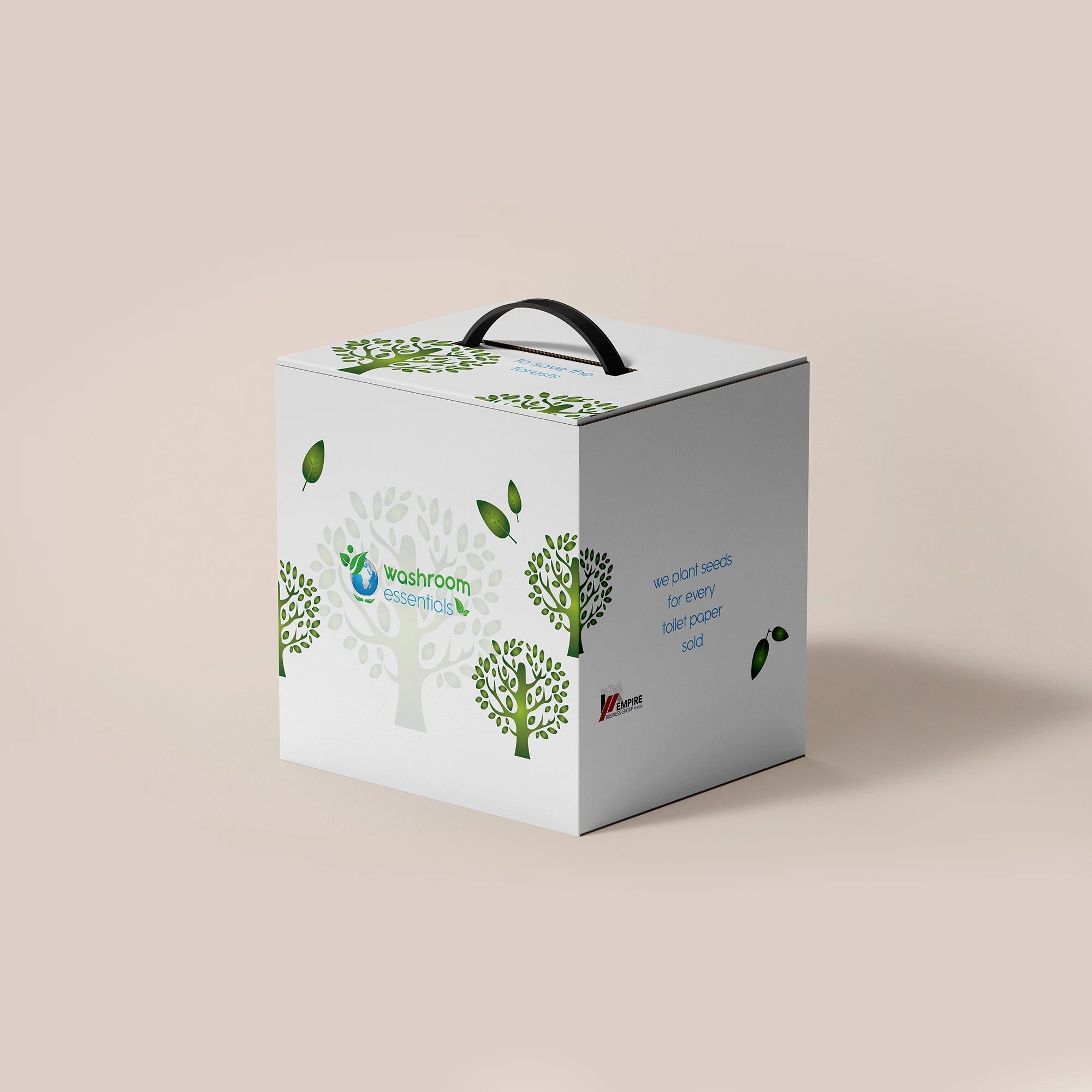
Carbon-neutral messaging can be a positive part of a supplier’s approach, particularly where emissions are measured and managed. Tree planting initiatives can also create a worthwhile additional impact. Still, these measures should complement better product and purchasing decisions, not replace them. A product that uses more paper than necessary is not made sustainable solely by an offset or donation.
For procurement teams, keeping a short record of product specifications can make repeat ordering easier. Note the material, certification, pack size, dispenser compatibility, expected usage rate and price per unit. This creates a more consistent purchasing process, especially across multiple locations or cleaning contractors.
Buy in bulk with a realistic usage plan
Bulk ordering is one of the simplest ways to make washroom supply more efficient. It reduces the frequency of deliveries, prevents shortages and gives homes and organisations better visibility over their spending. For businesses, carton purchasing can also limit the time staff spend placing small, reactive orders.
But bulk buying only helps when stock is used before it is damaged or forgotten. Paper products need a dry storage area away from leaks, cleaning chemicals and floor moisture. Rotate older cartons forward, especially in storage rooms with more than one person handling supplies. If a site has limited storage, a regular delivery schedule may be a better option than ordering the largest possible volume.
Usage data is valuable here. Track how many rolls, tissue boxes or towel packs a site uses over four weeks, then allow a buffer for holidays, events and peak trade periods. A café may see hand-towel use rise sharply on weekends. An office can use less toilet paper during school holidays or hybrid-work periods. Ordering based on actual patterns is more sustainable than routinely overstocking.
Do not overlook the washroom accessories
Paper goods are usually the largest recurring consumable, but accessories shape hygiene, durability and waste as well. Refillable soap dispensers can reduce single-use plastic bottle waste when maintained properly. Durable bins, toilet brush holders and bath accessories can avoid the false economy of items that crack or need replacing after a short period.
Choose accessories that are easy to clean and suited to the environment. A lightweight decorative dispenser may be fine for a home powder room but not for a high-traffic commercial bathroom. In public or shared spaces, wall-mounted and easy-to-service options can improve hygiene and reduce maintenance demands.
It is also worth checking whether cleaners have the right bins and signage to manage paper towels appropriately. Not every paper product belongs in every waste stream, and local council or commercial waste arrangements vary. Clear on-site guidance prevents contamination and helps staff and visitors use the facilities correctly.
Make sustainability part of dependable supply
For many buyers, the most responsible option is one that performs well every day, arrives when needed and supports a lower-impact supply chain. That is why sustainable washroom purchasing should not be treated as a separate project from cost control or hygiene standards. These goals can reinforce each other when you choose suitable materials, reliable quality and efficient pack formats.
Washroom Essentials supports this practical approach with quality paper goods designed for recurring household and commercial needs, including environmentally certified, recycled and bamboo options. Buying products that suit your space, your users and your storage capacity helps make every order work harder.
The next time you review washroom stock, start with one product line - perhaps hand towels or toilet paper - and compare it by material, performance and real usage. Small, informed changes are easier to maintain, and they add up with every carton ordered.