

Washroom Supplies for Cafes That Keep Service Moving
The coffee may be excellent and the cabinet full of fresh pastries, but a café washroom with an empty toilet roll or soggy hand towels can quickly undo that good impression. Reliable washroom supplies for cafes are not a background detail. They protect hygiene standards, support staff during busy service and show customers that every part of the venue is cared for.
For café owners, managers and hospitality teams, the best approach is not simply buying the cheapest carton. It is choosing dependable paper products, dispensers and replenishment routines that suit your foot traffic, available storage and brand values.
Start with the customer experience
A café washroom needs to feel clean, stocked and easy to use, particularly during breakfast and lunch rushes. Customers should be able to find toilet paper, hand towels or tissues without searching, and they should not have to touch a dispenser that looks neglected or is difficult to operate.
Small details carry weight. Soft, absorbent toilet paper feels more considered than thin, rough rolls. A tidy hand towel dispenser reduces wet benches and litter on the floor. Facial tissues can be a thoughtful addition in venues with baby-change facilities, accessible bathrooms or seating areas where customers may need a quick clean-up.
This does not mean every venue needs a luxury fit-out. A high-volume takeaway café has different needs from an all-day brunch venue or a boutique espresso bar. The goal is to select practical, hotel-quality essentials that match the pace and personality of your business.
The core washroom supplies for cafes
Most cafés can cover daily requirements with a focused range of products. Toilet paper, hand towels, soap and rubbish bins are the essentials, while facial tissues, sanitary disposal products and air freshening options may be appropriate depending on the washroom layout and customer base.
Toilet paper that lasts through service
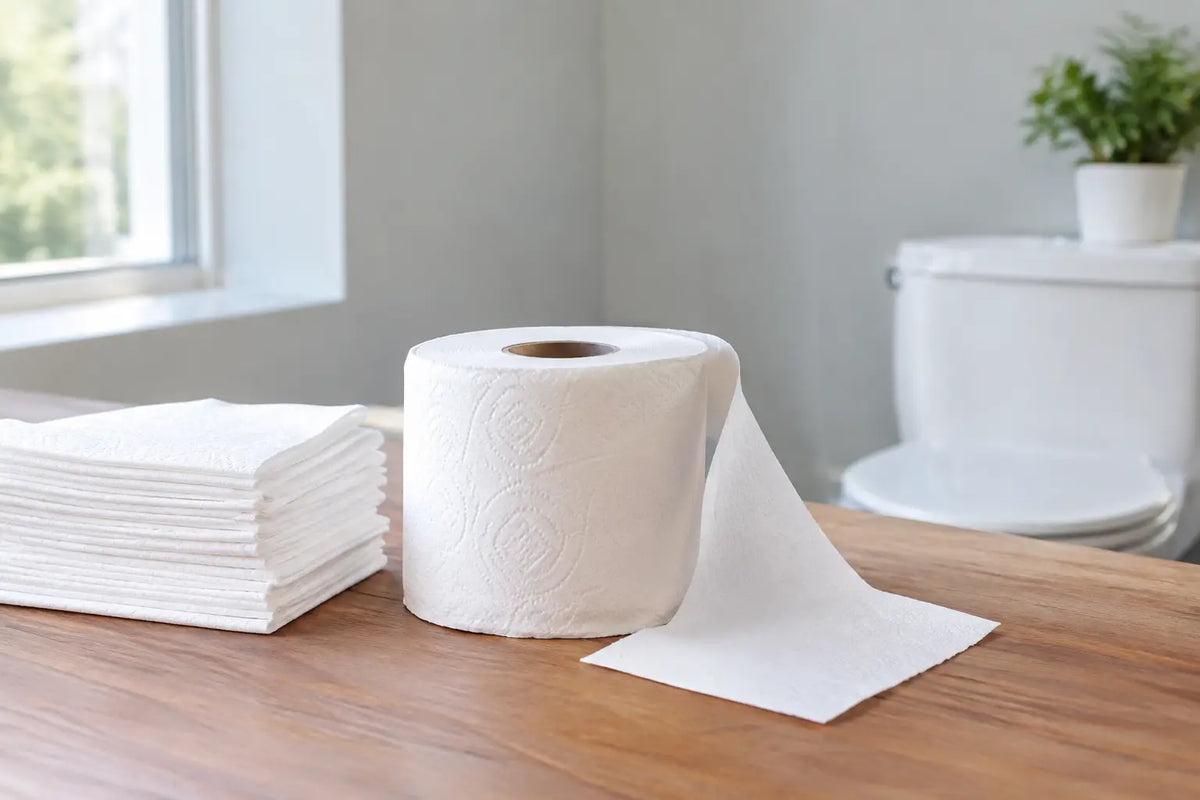
Toilet paper is the product customers notice most when it is missing or poor quality. Commercial jumbo rolls are often a sensible choice for high-traffic cafés because they hold more paper and need fewer changeovers. That helps staff stay focused on customers rather than responding to washroom checks every hour.
Standard rolls can still suit smaller venues with low to moderate traffic, especially where the holder is designed for them and storage is tight. Whatever format you choose, make sure the roll fits the dispenser properly. A good product in the wrong dispenser creates frustration, wasted paper and unnecessary maintenance.
Quality matters as much as roll size. Look for toilet paper that is absorbent, comfortable and reliable in use. Recycled, FSC-certified and bamboo options can help cafés make an environmentally responsible choice without compromising the everyday experience.
Hand towels and dispensers that reduce waste
Hand drying is where many café washrooms become untidy. Loose paper towel stacks are easy to overuse and can be scattered across benches or floors. A well-matched dispenser provides a cleaner presentation and gives guests one towel at a time, or a controlled amount, depending on the format.
Interleaved hand towels are a popular choice because they dispense neatly and are easy to top up. Roll hand towels can work well in busier locations, particularly with compatible controlled-dispense units. The right option depends on how frequently your washroom is used and whether your team has time for regular cleaning checks.
Choose towels with enough strength to dry hands effectively. Thin towels that require several sheets may look economical per carton but can increase overall use. A more absorbent towel often delivers better value, less mess and a more polished customer experience.
Facial tissues and thoughtful extras
Facial tissues are not essential in every café washroom, but they can make a difference in venues aiming for a more welcoming standard. They are useful around baby-change areas and in accessible bathrooms, and can also be placed discreetly in the dining space for spills and quick touch-ups.
Consider the needs of your site before adding extras. A small café with one compact bathroom may benefit most from keeping core products consistently stocked. A larger venue, family-friendly café or location with several amenities may need sanitary bins, liners, toilet seat cleaner and additional tissue supplies as part of a more complete washroom plan.
Choose products for your actual traffic
A quiet weekday can make any supply cupboard look well stocked. Saturday morning is the real test. Estimate your requirements around peak customer traffic, not average trade, and allow for staff use as well.
As a starting point, assess how many toilets and hand basins you have, the number of customers you serve on your busiest days and how often staff can check amenities. A counter-service café that turns over tables quickly may need much more toilet paper and hand towel capacity than a similarly sized venue with slower service.
Storage is the other practical consideration. Bulk ordering usually offers better value and prevents last-minute supermarket runs, but cartons must stay dry, clean and accessible. Keep reserve stock off the floor, away from food storage and clearly organised so staff can see what needs reordering.
For many operators, a regular online ordering schedule is easier than waiting until the last roll is in use. Ordering cartons of core consumables together reduces procurement friction and helps keep costs predictable. It also means fewer urgent tasks for already busy managers.
Build a simple washroom check routine
The strongest supply plan still needs a routine behind it. Assign washroom checks at set times, with extra checks during the busiest service periods. This is usually more effective than asking staff to look in only when a customer complains.
A quick check should confirm that toilet paper and hand towels are available, dispensers are working, bins are not overflowing and surfaces are presentable. Staff should also look for water pooling around basins, as wet floors create a safety risk and make the whole space feel less clean.
Keep a small refill kit close to the washroom or cleaning cupboard. When replacement rolls, towels and bin liners are easy to reach, replenishing takes minutes rather than becoming a task that gets postponed until after the rush.
Make sustainability practical, not performative
Café customers increasingly notice the choices behind everyday products. Selecting recycled paper, FSC-certified materials or bamboo ranges can support lower-impact purchasing and align with a venue that values responsible sourcing.
The most sustainable product is also one that performs properly. If a towel falls apart immediately or a poorly fitted dispenser encourages customers to pull excessive amounts of paper, waste rises. Look at material credentials alongside absorbency, sheet yield, packaging and dispenser compatibility.
Washroom Essentials offers a practical option for cafés seeking quality paper goods in bulk, including environmentally certified and recycled ranges. Choosing reliable products delivered directly to your venue can simplify restocking while supporting a more considered approach to everyday consumables.
Avoid the false economy of unsuitable supplies
Low unit price is only one part of the cost. Cheap toilet paper that runs out early, towels that require multiple sheets and dispensers that jam can all increase labour, waste and customer complaints. The better measure is how long the product lasts, how well it works and how much attention it demands from your team.
It is also worth standardising where possible. Using one compatible toilet roll format and one or two hand towel formats across the venue makes ordering, staff training and stock checks far simpler. Exceptions are worthwhile only when they solve a genuine problem, such as fitting a small accessible bathroom or meeting the demands of a very busy service area.
A café washroom does not need to be elaborate to leave the right impression. Keep it clean, choose paper products that work hard, store enough stock for your busiest days and make replenishment part of normal service. Customers may not comment when everything is in place, but they will remember the care behind it.