

How to Stock Office Washrooms Properly
A washroom only gets noticed when something runs out. No toilet paper in the middle of a busy workday, wet hands because the hand towels are gone, or an empty soap area at 8.30 am all send the same message - this space is not being managed well. If you are working out how to stock office washrooms, the goal is simple: keep supplies consistent, hygienic and easy to maintain without over-ordering or wasting storage space.
For office managers, cleaners and procurement teams, that usually means building a supply plan around real usage, not guesswork. The right stock mix saves time, reduces complaints and helps your workplace present well to staff, visitors and clients.
Start with how the washroom is actually used
The best way to stock an office washroom depends on the size of the workplace, the number of amenities, and how often people are on site. A small office with ten staff and one toilet has very different needs from a multi-level workspace with shared facilities, visiting contractors and daily client traffic.
Look first at headcount, then at usage patterns. Hybrid offices can be tricky because attendance shifts across the week. Monday and Friday may be quiet, while Tuesday to Thursday create most of the demand. If your office hosts meetings, training sessions or public-facing appointments, your washroom stock levels need to cover those peaks rather than the average day.
It also helps to assess each washroom separately. A main washroom near reception often runs through consumables faster than one tucked away in a back office. If you stock every washroom identically, you may still end up with shortages in the busiest areas and excess stock elsewhere.
The core products every office washroom needs
When people think about washroom supplies, they usually start and end with toilet paper. That matters, but it is only one part of the picture. A properly stocked office washroom should cover the full handwashing and drying routine, plus basic hygiene support.
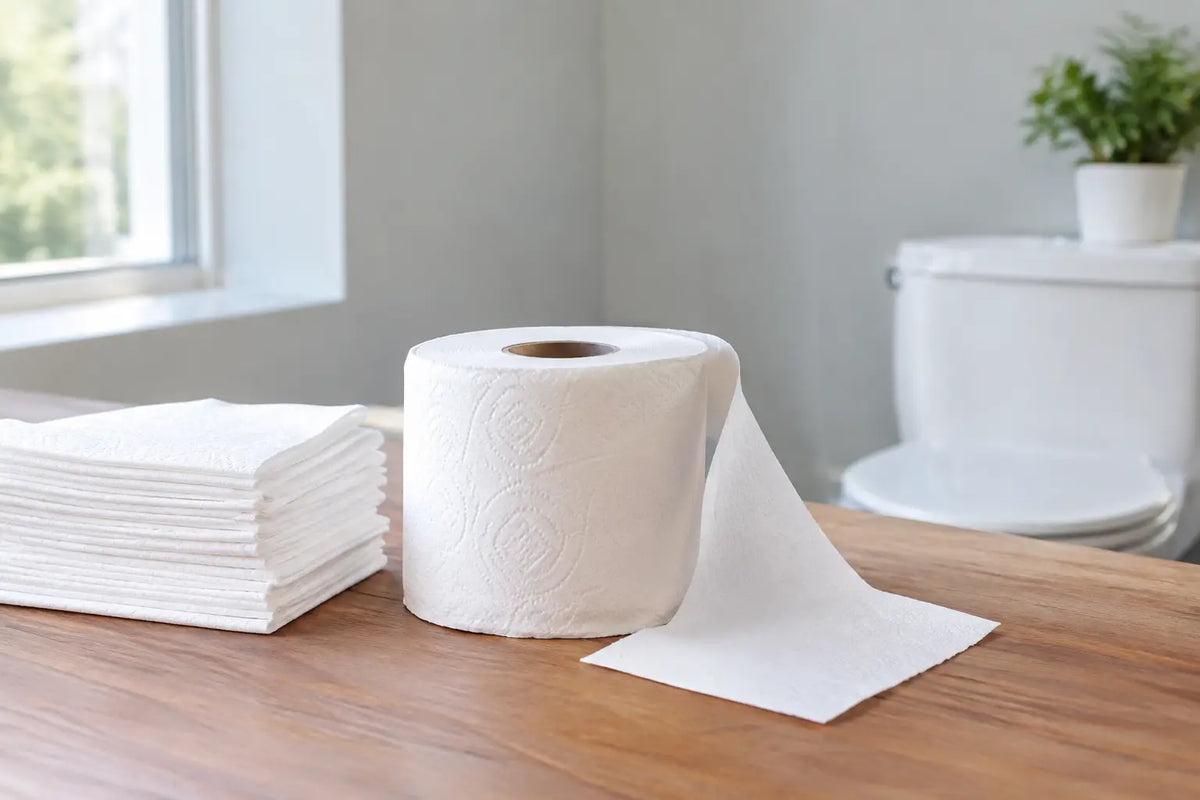
Toilet paper is the obvious essential, and quality matters more than many workplaces assume. If the product is too thin or rolls run out too quickly, staff use more of it and refilling becomes more frequent. Bulk packs or carton quantities are usually the most practical option for offices because they improve cost control and reduce emergency reorders.
Hand towels or other hand-drying products are just as important. In many office settings, paper hand towels remain the most dependable choice because they are hygienic, quick to use and easy to manage in shared amenities. The right format depends on your dispenser setup and how many people use the washroom each day.
Facial tissues can also be worth including, especially in offices with meeting rooms, reception zones or premium amenities. They are not mandatory in every washroom, but in some workplaces they improve the overall standard of presentation.
You should also think about dispensers as part of your stock strategy, not as a separate issue. Even high-quality paper products create problems if they do not fit the dispenser properly or if the dispenser capacity is too small for your traffic levels.
How to stock office washrooms without over-ordering
One of the most common mistakes is buying too little and reordering too often. The second most common is overcorrecting and filling the storeroom with products that take months to move. A better approach is to set par levels, which means deciding the minimum amount of each product you want on hand before reordering.
For example, you might keep enough toilet paper for four to six weeks of normal use, with extra buffer stock if your site has irregular visitor traffic. Hand towels may need a higher buffer if your office washrooms are heavily used or if drying options are limited to paper only.
The easiest way to set these levels is to track actual consumption for a month or two. Count how many cartons or sleeves are used in that period, then add a margin for busy weeks. This turns stocking from a reactive chore into a routine process.
Storage space does matter here. If your back-of-house area is tight, the best buying decision is not always the largest possible order. You need enough stock to stay ahead, but not so much that products are crammed into unsuitable spaces where cartons can be damaged or access becomes difficult.
Choose products that match your workplace standards
Price always matters, but the cheapest unit cost is not automatically the best value. Office washroom supplies affect hygiene, staff experience and the impression your business gives to visitors. Scratchy paper, constant refills or low-grade products can create more dissatisfaction than the savings justify.
A better benchmark is reliable quality at a sensible bulk price. Products that last longer, dispense properly and hold up well in commercial settings often reduce total usage over time. That is especially true with toilet paper and hand towels, where poor quality can lead to overuse.
There is also a sustainability decision to make. Many Australian businesses now want washroom consumables that support environmental goals without compromising performance. FSC-certified paper, recycled options and bamboo-based ranges can be a practical fit for offices that want to reduce environmental impact while maintaining a professional standard.
This is one area where procurement values and day-to-day operations can align well. Sustainable paper products are no longer a niche choice. For many workplaces, they are simply the smarter long-term option.
Don’t ignore dispensers and refill efficiency
If you are reviewing how to stock office washrooms, dispensers deserve more attention than they usually get. The dispenser controls how quickly product is used, how easy it is to refill and how tidy the washroom looks throughout the day.
High-capacity dispensers make sense in busy offices because they reduce refill frequency and the risk of running out during peak periods. Compact dispensers may suit small washrooms where wall space is limited, but they can create more work for cleaning staff if usage is heavier than expected.
Compatibility is critical. Not all toilet paper, hand towel or tissue formats work across all units, and mismatched products can jam, tear or dispense poorly. Standardising dispenser types across your site can make ordering much simpler and cut down on mistakes during restocking.
It is also worth deciding who owns refill responsibility. In some workplaces it sits with the cleaner, while in others office staff top up during the day. Either model can work, but it needs to be clear. If responsibility is vague, stockouts are almost guaranteed.
Build a simple restocking routine
Good washroom management is rarely about buying more. It is about checking stock at the right times and replacing items before they become a problem. A simple routine usually beats an elaborate system that no one follows.
For most offices, a scheduled check works best. Daily checks suit high-use washrooms, while smaller offices may manage well with checks a few times a week. The key is consistency. Staff should know when stock levels are reviewed, where backup supplies are stored and how to report shortages quickly.
Visual checks are useful, but written stock tracking adds another layer of control. Even a basic record of what was used and what was reordered can show patterns over time. You may notice, for example, that one washroom burns through hand towels at twice the expected rate or that one product line is regularly running short before the next delivery.
Those small insights help you adjust before issues become complaints.
Plan for presentation as well as supply
A stocked washroom still feels poorly managed if shelves are cluttered, dispensers are marked or loose product is left visible. Presentation matters because staff and visitors read it as a sign of how the workplace is run.
That does not mean over-styling the space. It means keeping products neat, dispensers maintained and refill stock stored properly out of sight. If you offer premium amenities in client-facing offices, a more polished setup may be worth it. In a back-of-house or industrial office environment, practicality may take priority. It depends on who uses the space and what standard your business wants to hold.
For many organisations, the best setup is one that feels clean, dependable and easy to maintain. That standard is achievable without making washroom management complicated.
Buy from a supplier that understands repeat demand
Office washroom supplies are not a one-off purchase. They are a recurring operational need, so reliability matters just as much as product range. A supplier that offers consistent stock availability, practical carton quantities and dependable delivery can remove a lot of friction from the process.
That is especially important if you are ordering for multiple washrooms or more than one site. Having a one-stop shop for toilet paper, facial tissues, hand towels and dispenser-compatible products makes ordering faster and easier to manage. It also reduces the temptation to patch together supplies from different sources every time something runs low.
If sustainability matters to your business, this is also where supplier choice becomes meaningful. Washroom Essentials supports practical bulk purchasing with quality paper products, including environmentally conscious options that help workplaces maintain standards while making more responsible buying decisions.
A well-stocked office washroom does not need to be complicated. It just needs the right products, the right quantities and a routine that matches how your workplace actually runs. Get that balance right, and washroom supplies stop being a last-minute problem and become one less thing your team has to think about.